What is a Color Study & How Do You Do One?
What is a Color Study & How Do You Do Ane?
Tips Disclosure: This post may incorporate affiliate links. That means if you lot buy something we go a pocket-size commission at no extra cost to y'all(learn more)
A color study is a quick, loose do piece for exploring different color options earlier first your bodily piece.
It's usually the side by side step later on a thumbnail sketch.
While a thumbnailing session is meant to assistance you explore your composition, a color study helps you explore calorie-free, grade, and mood by playing with different color palettes.
Call up of a study much like an exploratory gamble to meliorate your color skills & to help yous detect cool ideas for your paintings.
Why Do A Color Report?
Hither'south one of the biggest beneifts: colour studies salvage you time and frustration.
Color studies are a good idea no matter what medium you're working in whether information technology's oil or acrylic paints, pastels, watercolors, or even digital painting.
Studies are a quick, low-stakes manner to explore different moods and experiment with color palettes earlier you commit to the main piece.
Have you ever gotten halfway through a painting or cartoon and noticed that you made a mistake that you now have to gear up, or wished you'd done something unlike with your color palette?
A written report tin salve you a lot of headaches down the route because information technology helps y'all make decisions beforehand.
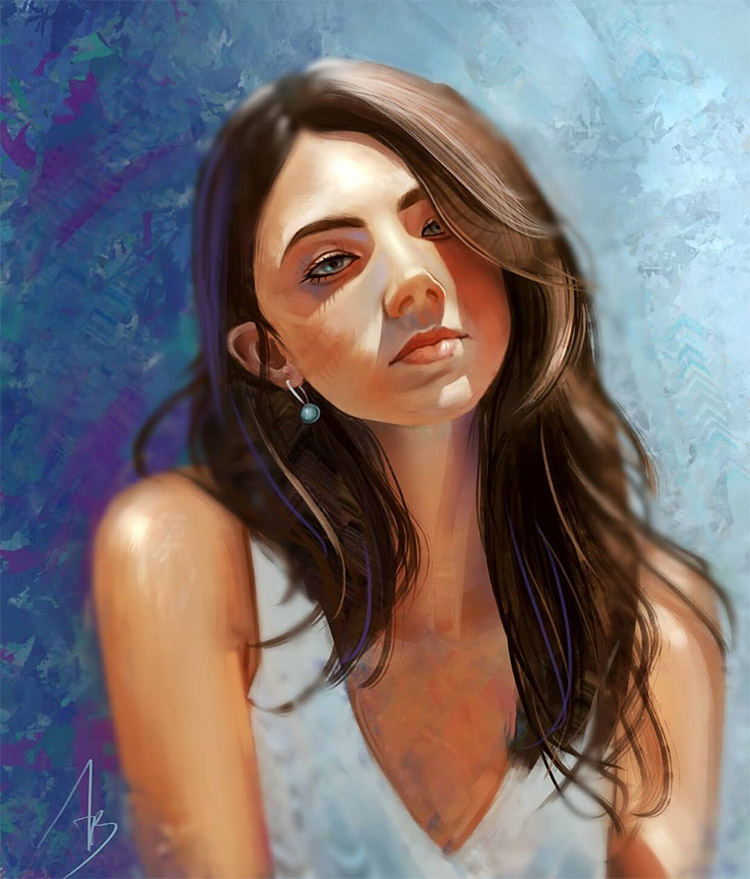
Yous color choices can hateful the difference between a piece that'due south just "meh" and one that'south unforgettable.
Colour can completely change the mood of a painting. In fact, it frequently does.
Messing around with this beforehand can assist you hone the feeling you want to convey in your piece.
If y'all're working from life or a reference epitome you might exist tempted to copy the colors exactly as y'all run across them. Just what if tweaking those colors or drastically changing them would create a more interesting, dynamic piece?
Yous never know until y'all endeavour.
By taking the time to practice color studies you'll brush upwardly on colour matching and mixing skills. Y'all'll learn how different colors work together.
You'll as well become way ameliorate at working with values on the color spectrum, which volition help when rendering light and shadow.
The best function is, color studies help yous build what might be the about of import skill an artist can accept: the capacity to try new things.
As artists we want to innovate and create stuff no one'southward thought of before. Still it'due south easy to get into a rut of repeating what nosotros've washed and what nosotros know works.
Small, depression-pressure colour studies are a smashing way to bust out of a color rut and endeavour something wild since your whole piece isn't at pale.
It's just a teeny little color written report. No big deal!
How To Practice Your Own Colour Study
Like thumbnails, your color studies should be small.
Think postcard-sized for paint and pastel.
For colored pencils go even smaller.
If you're working digitally utilize low resolution and resist the temptation to zoom in.
Be Loose
With all mediums go for large, broad strokes. And whatever yous do, don't worry about details.
Work quickly. Don't overthink it.
Color studies shouldn't have a lot of time.
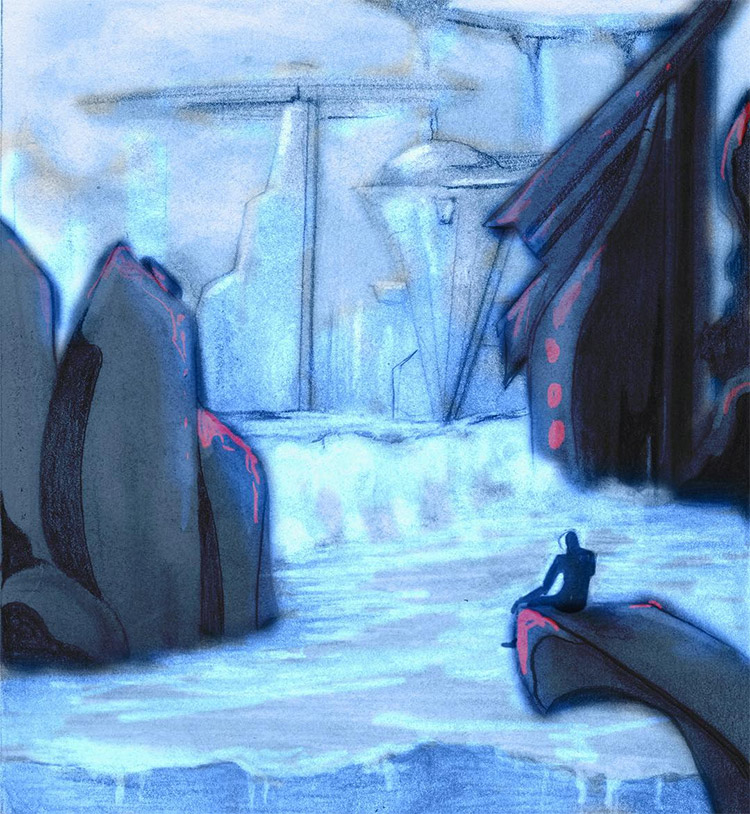
If yous're painting use bigger brushes than you lot ordinarily would on a tiny slice.
Calibration upward your castor size if you're going digital. For dry mediums don't be afraid to scribble!
Include little swatches of your colors somewhere on the report like the acme or bottom margin, or on another page. That'll make them a lot easier to re-create when you move onto the main slice.
If you're really on the brawl you can label your swatches. The more than organized you are, the less time you'll spend figuring things out once more afterward.
Also endeavour layering different colors, especially if y'all're working with a translucent medium like watercolor or pastel.
Quick tip: if y'all're going to exist layering colors it's also a good idea to do separate studies for each layer.
For example, if yous're creating a pastel piece make a quick written report of the lesser layer. Then duplicate that study and add together the next layer.
If yous're going to add a third layer duplicate the previous study and add the terminal layer.
That will help you keep track of the colors you're using for each layer and aid you spot areas where y'all want to make changes.
Pay Attention To Value
While you don't need to worry about detail when doing color studies, don't forget about value either.
Brand sure the colors you choose are the correct values so you don't completely lose the form in your study.
If you lot want to use yellow for a shadow make sure it'due south a darker shade of yellowish. If you want to paint light make sure to apply a lighter or brighter color than the residual of the study.
Don't Exist Afraid To Experiment
Dare to push across your first impulse.
Equally artists we know that our finished pieces rarely expect how we originally imagined them.
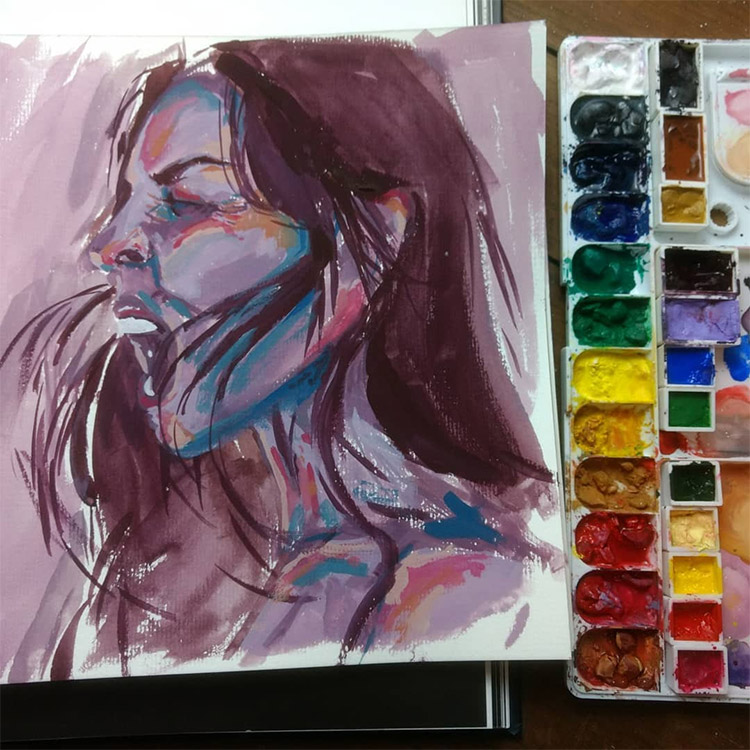
In the process of translating that piece from our imagination to the folio or the screen nosotros experimented, tried unlike things, and took some risks. Those risks are what makes a piece memorable.
Information technology's okay to experiment. If you lot're working from a reference image or real life you don't have to stick to the "real" colors perfectly. Try different hues and see how they await together.
Stretch yourself. Try something completely unlike.
Find how the mood changes with each study. See what works and what doesn't. You might terminate upwards choosing a color scheme that'southward completely different from what you would take gone with otherwise.
Do More Than One Study
You'll probably exist tempted to bust out one quick color study that's pretty good, so skip off to kickoff your main piece. Don't!
Make at least three color studies earlier moving onto the main project.
Try the same composition in bright colors, muted colors, muddied colors, peradventure with a carmine hue, or with washed out tones like an old photograph.
Get crazy with dissimilar palettes and different temperatures. Button the values to the extremes. Make the sky green.
For a fun practise try making a dozen or more studies of the same image. Why non?
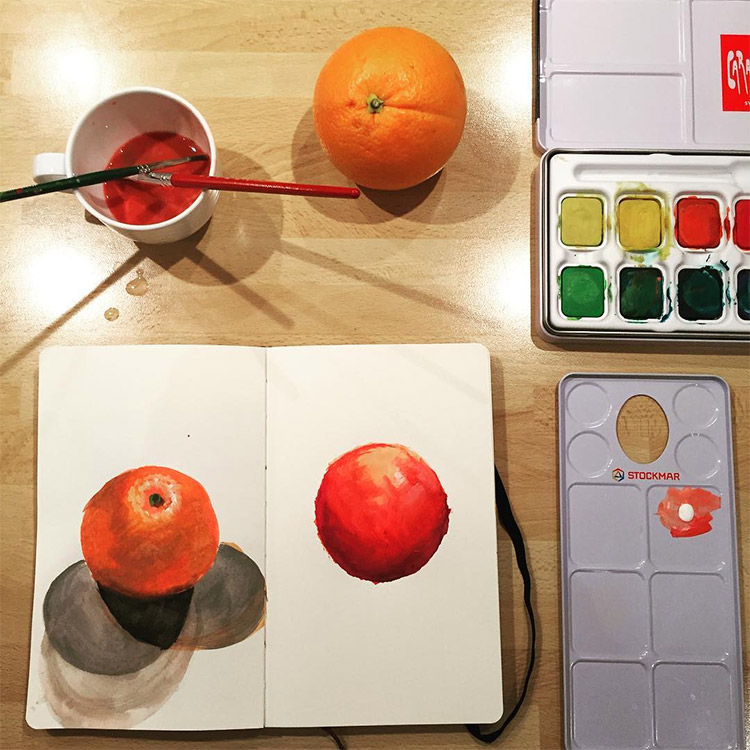
It doesn't fifty-fifty have to exist preparation for a bigger piece. Do a bunch of dissimilar studies of a simple scene but to see how it would look.
Not only exercise colour studies save y'all a lot of time, only they'll push you equally an artist and ultimately make you and your work ameliorate.
They're a fast, commitment-costless manner to experiment with color and break out of colour ruts.
They'll build your skills in colour selection and enable you lot to take chances with unusual color schemes.
With practice you'll go comfy with color studies and learn to create any mood you want, peculiarly once you empathize how to mix & friction match colour ideas.

Author: McKella Sawyer
McKella is an artist and freelance writer from Common salt Lake Metropolis, Utah. When she isn't painting or writing for clients she loves to write fiction, travel, and explore the mountains nigh her abode either on human foot, horseback, or a mountain bike. Y'all tin can view her art on Etsy and her writing services at TheCafeWordsmith.com.
Source: https://conceptartempire.com/color-study/
0 Response to "What is a Color Study & How Do You Do One?"
Post a Comment